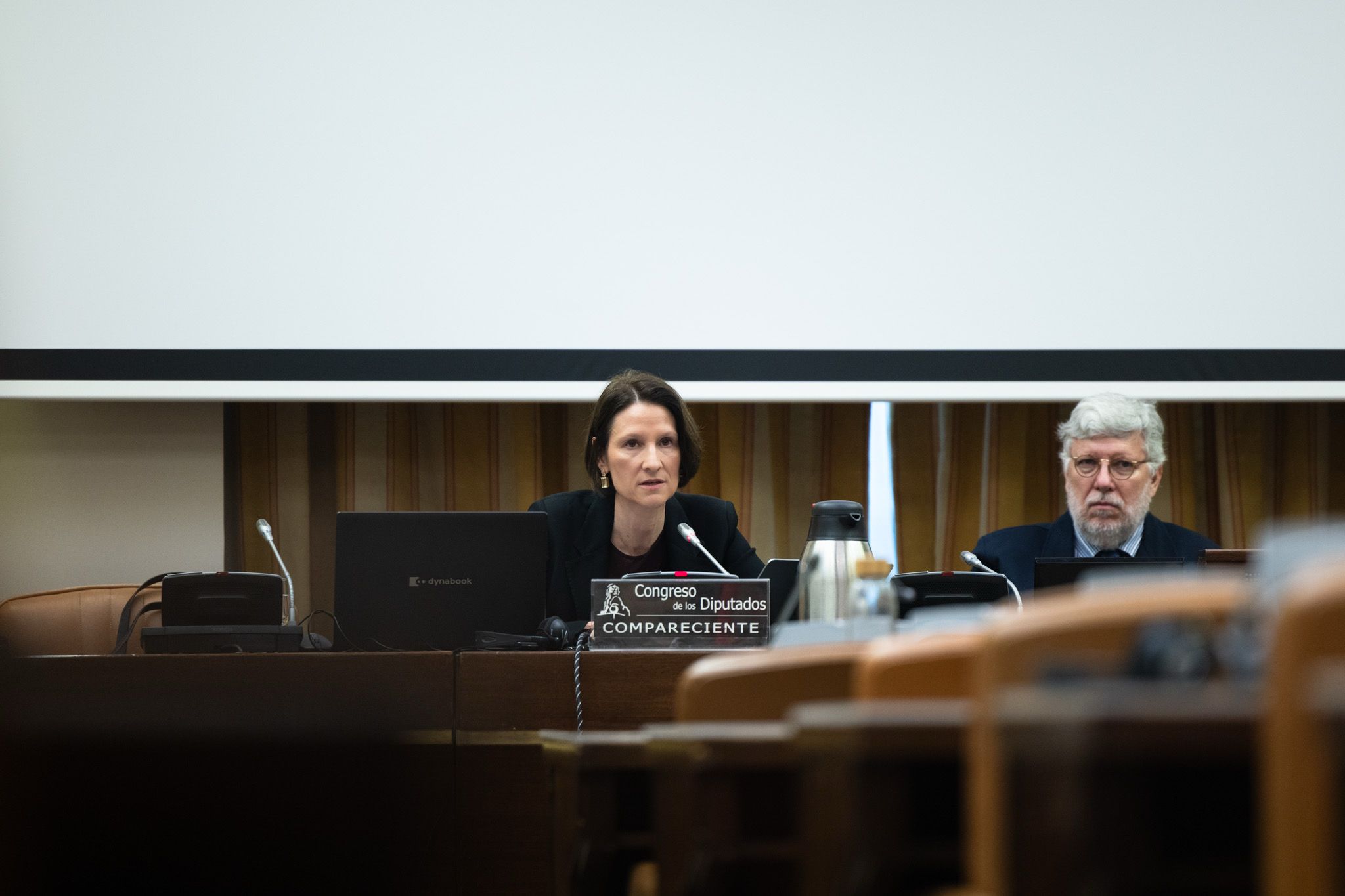
On March 27th 2025
Honourable Members of Parliament,
In 2017, Mark Zuckerberg, founder of Facebook, declared that the mission of his company was “to give people the power to share and make the world more open and connected.” He also affirmed that social media existed “to help build friendships.”
The turning point for putting that narrative to the test—the notion that social media fosters the kind of connections human beings truly need—was the pandemic. During the height of the crisis, billions of young people found themselves hooked on social networks in the absence of nobler alternatives. The pandemic became a large-scale natural experiment, affording us a chance to examine the consequences of such use. What becomes of a young person’s mental health when they spend their days chasing external stimuli, constantly craving the approval of anonymous profiles?
In 2021, Common Sense Media published a study on the relationship between mental health and social media use among those aged 14 to 22 during the pandemic. One of the study’s findings is especially striking: it concluded that those who use social media are nearly three times more likely to exhibit symptoms of moderate to severe depression than those who never use it.
This raises a pivotal question posed by Common Sense itself: in which direction does the causality run?
In other words, do depressive symptoms stem from social media use? Or is it rather that those who are already depressed turn to social media in search of solace? Let us examine both hypotheses more closely:
Hypothesis 1:The time spent on social media may well cause depressive symptoms. Why? Because the platforms’ algorithms are designed to isolate us. They serve us content that confirms our biases, dividing society and impairing our ability to function in a pluralistic society. They also isolate us because a human connection is not the same as a digital one. Indeed, a study by YouGov found that 22% of millennials—despite having hundreds of online connections—report having no real friends. If this hypothesis holds, then reducing screen time should be a priority.
Hypothesis 2: Young people might use social media because they are already depressed. That theory held more water during the pandemic, when physical contact was restricted. If true, it would suggest we should encourage social media use. But this hypothesis is not currently supported by the evidence.
Still, Common Sense Media’s report hedges its conclusions, stating that the direction of the causal relationship is unclear. Yet tellingly, it opts for the second hypothesis in its title: “2021: Coping with COVID-19—How Young People Use Digital Media to Manage Their Mental Health.” The report concludes—without sufficient data or argument—that those with depressive symptoms are more likely to use social media because they are already depressed. The platforms, in this view, act as a relief. The title itself suggests that social media does not exacerbate depression; rather, it serves as an oasis for the afflicted. It even implies that these platforms could be therapeutic. But to evaluate such a stance, we must consider the wider context: Common Sense Media has, in recent years, received sponsorship from Twitter, the Bill & Melinda Gates Foundation, and the foundations of Zuckerberg and Bezos, among others.
In the summer of 2024, the Surgeon General of the United States—the nation’s highest health authority—published a report titled “Social Media and Youth Mental Health.” Surgeon General reports typically form the basis for US legislative action. This document cited studies linking social media use to suicide, eating disorders, low self-esteem, ADHD, depression, anxiety, and more.
The Surgeon General’s conclusion was unequivocal:
“According to this principle [‘safety first’], a basic threshold for safety must be met, and until safety is demonstrated with rigorous evidence and independent evaluation, protections are put in place to minimize the risk of harm from products, services, or goods.”
Sceptics often counter these findings with a familiar refrain: “Correlation is not causation.” That argument has long paralysed political and societal action. And here we arrive at the heart of my testimony. This idea—that while depression and social media use may coexist, we cannot know which causes which—no longer holds water. Since the Surgeon General’s report, this view has lost favour in the scientific community. It is no longer tenable for journalists, policymakers, or experts to continue promoting a narrative that lacks empirical grounding.
We now do have evidence of causation—thanks to experimental studies that move beyond observation to intervention. These are randomised controlled trials, in which groups are assigned to limit screen time. The results are clear: reducing social media use significantly decreases depressive symptoms. Two major studies—by Schmidt-Persson et al. and Lambert et al.—demonstrate this and are included in the academic references hereafter provided.
It is crucial to remember that tech companies are not in the business of offering content to users—they are in the business of delivering users’ attention to those who sponsor that content.
Once upon a time, parents could control what their children watched. They chose when the television was turned on, what channel played, and which DVD was viewed. Today, with smartphones in every pocket and more screens than windows in our homes, parents have lost that control. They cannot guarantee that what their children consume is appropriate—or safe.
Knowledge may have been democratised—many platforms are free—but nothing is truly free. These companies are financed by advertising and data sales. When a corporation pays, it is called advertising; when a political party or government pays, it is called propaganda. And this distinction matters greatly, especially when education is increasingly treated as a tool for ideological training rather than intellectual cultivation.
In short: when our children are online, they are the product. To maximise profit, tech companies must keep our children online for as long as possible. For this purpose, they employ the brightest minds—psychologists, engineers—to develop addictive features like infinite scrolling and autoplay, designed to hijack attention.
In 2021, Frances Haugen, a former Facebook product manager, testified before the US Congress: “Facebook harms children, stoke division, and weakens our democracy”. She claims that Facebook can change—but that it won’t do so on its own. She argued that algorithms fuel misinformation, hatred, and violence because outrage is what keeps users engaged. She discusses how models that maximise time online favour controversy, disinformation, and extremism. People are drawn to what outrages them.
This very industry—lavishly funding marketing under the banner of corporate social responsibility—sponsors research, courts headteachers, funds university chairs, and hosts educational conferences. It pays speakers, awards prizes, and forms lucrative partnerships with “experts” who are later selected to advise governments on regulation. Teachers who promote their products are granted honorary titles like Distinguished Educators, often without rigorous assessment.
These same companies sponsor organisations like Common Sense, whose data may be sound but whose conclusions and recommendations often diverge from the evidence. This happens in numerous international reports, where researchers collect the data, but professional writers—often with political agendas—are hired to shape conclusions, titles, and executive summaries.
Consider, for instance, a recent UNICEF report titled “The Impact of Technology on Adolescents” published in Spain (there is no English version for this report). It found a threefold increase in depressive symptoms linked to problematic internet use. And yet, it concludes: “Causality cannot be established.” Rather than recommending a delay in device use, it asserts that “Online education is here to stay.”
To address the root of the issue, we must expose the mechanisms of influence at play in this industry.
I offer the following recommendations:
• Raise the minimum age for access to social media to 18. (Urge the EU to amend the current directive, which does not allow member states to set the limit above 16).
• Legislate mandatory, explicit health warnings—outside of adhesion contracts—on devices and apps, regarding mental health risks.
• Create a transparency portal listing donations from tech companies to individuals and institutions likely to promote their products.
• Mandate clear labelling of “sponsored content” whenever the industry funds media, experts, or mental health-related events.
• Require all experts advising government to sign declarations of no conflict of interest.
• Include a research methodology course in journalism faculties, teaching students to critically analyse sources, studies, and industry ties.
• Ban advertising by tech firms, just as tobacco ads were banned once their harm was known.
• End the misleading rhetoric of “responsible use.” We cannot expect children—whose self-regulation is still developing—to resist products designed for addiction.
• Launch public awareness campaigns on the dangers of early tech use. Social media use should be as socially unacceptable as smoking.
• Align Spain’s education law (LOMLOE) with the need to de-escalate technology in classrooms. We cannot call this a public health crisis and simultaneously compel digital use in schools.
• Ban smartphones in schools—both in classrooms and common areas. Prohibit individual-use devices in education, as they are gateways to recreational content and are not supported by pre-university research.
THANK YOU.
BIBLIOGRAPHIC REFERENCES
Pointing to the harmful impact of social media on the mental health of children and young people (suicide, ADHD, eating disorders, depression, anxiety, low self-esteem, etc.)
Abi-Jaoude, E., Naylor, K. T., & Pignatiello, A. (2020). Smartphones, social media use and youth mental health. Canadian Medical Association journal. 192(6), E136–E141. https://doi.org/10.1503/cmaj.190434
Allcott, H., Braghieri, L., Eichmeyer, S., & Gentzkow, M. (2020). The Welfare Effects of Social Media. American Economic Review. 110(3), 629-76. DOI: 10.1257/aer.20190658
Allcott, H., Gentzkow, M., & Song, L. (2022). Digital Addiction. American Economic Review. 112 (7): 2424-63. https://doi.org/10.1257/aer.20210867
Alonzo, R., Hussain, J., Stranges, S., & Anderson, K. K. (2021). Interplay between social media use, sleep quality, and mental health in youth: A systematic review. Sleep medicine reviews. 56,101414. https://doi.org/10.1016/j.smrv.2020.101414
Andreassen, C. S. (2015). Online Social Network Site Addiction: A Comprehensive Review. Current Addiction Reports. 2, 175–184. https://doi.org/10.1007/s40429-015-0056-9
Appel, H., Gerlach, A. L., & Crusius, J. (2016). The Interplay Between Facebook Use, Social Comparison, Envy, And Depression. Current Opinion in Psychology. 9, 44–49. https://doi.org/10.1016/j.copsyc.2015.10.006
Bickham, D.S., Hunt, E., Bediou, B., & Rich, M. (2022). Adolescent Media Use: Attitudes, Effects, and Online Experiences. Boston, MA: Boston Children’s Hospital Digital Wellness Lab. Retrieved from https://digitalwellnesslab.org/wp-
content/uploads/Pulse-Survey_Adolescent-Attitudes-Effects-and-Experiences.pdf
Braghieri, L., Levy, R., & Makarin, A. (2022). Social Media and Mental Health. American Economic Review. 112(11), 3660-3693. https://pubs.aeaweb.org/doi/abs/10.1257/aer.20211218
Boer, M., Stevens, G., Finkenauer, C., & van den Eijnden, R. (2020). Attention deficit hyperactivity disorder-symptoms, social media use intensity, and social media use problems in adolescents: Investigating directionality. Child Development. 91(4), e853-e865. https://doi. org/10.1111/cdev.13334
Carville, O. (2022, November 30). TikTok’s Viral Challenges Keep Luring Young Kids to Their Deaths. Bloomberg. Retrievedfrom https://www.bloomberg.com/news/features/2022-11-30/is-tiktok-responsible-if-kids-die-doing-dangerous-viral-challenges
Dekkers, T. J., & van Hoorn, J. (2022). Understanding Problematic Social Media Use in Adolescents with Attention-Deficit/Hyperactivity Disorder (ADHD): A Narrative Review and Clinical Recommendations. Brain Sciences. 12(12), 1625. https://
doi.org/10.3390/brainsci12121625
Doucleff, M. (2023, April 25). The Truth About Teens, Social Media and the Mental Health Crisis. NPR. RetrievedMay 2, 2023, from https://www.npr.org/sections/health-shots/2023/04/25/1171773181/social-media-teens-mental-health
Dyer, C. (2022). Social media content contributed to teenager’s death “in more than a minimal way,” says coroner. BMJ (Clinical research ed.), 379, o2374. https://doi.org/10.1136/bmj.o2374
Dyson, M. P., Hartling, L., Shulhan, J., Chisholm, A., Milne, A., Sundar, P., Scott, S. D., & Newton, A. S. (2016). A Systematic Review of Social Media Use to Discuss and View Deliberate Self-Harm Acts. PloS one. 11(5), e0155813. https://doi.org/10.1371/journal.pone.0155813
Fioravanti, G., Casale, S., Benucci, S.B., Prostamo, A., Falone, A., Ricca, V., & Rotella, F. (2021). Fear of missing out and social networking sites use and abuse: A meta-analysis. Computers in Human Behavior. 122, 106839. https://doi.org/10.1016/j.chb.2021.106839
Franchina, V., Vanden Abeele, M., van Rooij, A. J., Lo Coco, G., & De Marez, L. (2018). Fear of Missing Out as a Predictor of Problematic Social Media Use and Phubbing Behavior among Flemish Adolescents. International Journal Of Environmental Research And Public Health. 15(10), 2319. https://doi.org/10.3390/ijerph15102319
Gelles-Watnick, R. (2022). Explicit Content, Time-wasting Are Key Social Media Worries For Parents Of U.S. Teens. PewResearch Center. United States of America. Retrieved fromhttps://www.pewresearch.org/fact-tank/2022/12/15/explicit-content-time-wasting-are-key-social-media-worries-for-
parents-of-u-s-teens
Griffiths, M.D. (2018). Adolescent social networking: How do social media operators facilitate habitual use? Education and Health. 36(3), 66-69. Retrieved from https://sheu.org.uk/sheux/EH/eh363mdg.pdf
He, Q., Turel, O., & Bechara, A. (2017). Brain anatomy alterations associated with Social Networking Site (SNS) addiction. Scientific reports. 7, 45064. https://doi.org/10.1038/srep45064
Hamm, M. P., Newton, A. S., Chisholm, A., Shulhan, J., Milne, A., Sundar, P., Ennis, H., Scott, S. D., & Hartling, L. (2015). Prevalence and Effect of Cyberbullying on Children and Young People: A Scoping Review of Social Media Studies. JAMA pediatrics. 169(8), 770–777. https://doi.org/10.1001/jamapediatrics.2015.0944
Holland, G., & Tiggemann, M. (2016). A systematic review of the impact of the use of social networking sites on body image and disordered eating outcomes. Body image. 17, 100–110. https://doi.org/10.1016/j.bodyim.2016.02.008
Hunt, M. G., Marx, R., Lipson, C., & Young, J. (2018). No more FOMO: Limiting social media decreases loneliness and depression. Journal of Social and Clinical Psychology. 37(10), 751–768. https://doi.org/10.1521/jscp.2018.37.10.751
Kelly, Y., Zilanawala, A., Booker, C., & Sacker, A. (2019). Social Media Use and Adolescent Mental Health: Findings From the UK Millennium Cohort Study. EClinicalMedicine. 6, 59–68. https://doi.org/10.1016/j.eclinm.2018.12.005
Kleemans, M., Daalmans, S., Carbaat, I., & Anschütz, D. (2018). Picture Perfect: The Direct Effect Of Manipulated Instagram Photos On Body Image In Adolescent
Girls. Media Psychology. 21(1), 93–110. https://doi.org/10.1080/15213269.2016.1257392
Kuss, D. J., & Griffiths, M. D. (2011). Online social networking and addiction–a review of the psychological literature. International journal of environmental research and public health. 8(9), 3528–3552. https://doi.org/10.3390/ijerph8093528
Lambert, J., Barnstable, G., Minter, E., Cooper, J. & McEwan, D. (2022) Taking a One-Week Break from Social Media Improves Well-Being, Depression, and Anxiety: A Randomized Controlled Trial, Cyberpsychology, Behavior, and Social Networking. 25(5). 287-293. https://doi.org/10.1089/cyber.2021.0324
Liu, R. T., Steele, S. J., Hamilton, J. L., Do, Q. B. P., Furbish, K., Burke, T. A., Martinez, A. P., & Gerlus, N. (2020). Sleep and suicide: A systematic review and meta-analysis of longitudinal studies. Clinical psychology review. 81, 101895. https://doi.org/10.1016/j.cpr.2020.101895
Lonergan, A. R., Bussey, K., Fardouly, J., Griffiths, S., Murray, S. B., Hay, P., Mond, J., Trompeter, N., & Mitchison, D. (2020). Protect me from my selfie: Examining the association between photo-based social media behaviors and self-reported eating disorders in adolescence. The International journal of eating disorders. 53(5), 485–496. https://doi.org/10.1002/eat.23256
Mabe, A. G., Forney, K. J., & Keel, P. K. (2014). Do You “Like” My Photo? Facebook Use Maintains Eating Disorder Risk. The International journal of eating disorders. 47(5), 516–523. https://doi.org/10.1002/eat.22254
Marino, C., Gini, G., Vieno, A., & Spada, M. M. (2018). The associations between problematic Facebook use, psychological distress and well-being among adolescents and young adults: A systematic review and meta-analysis. Journal of
affective disorders. 226, 274–281. https://doi.org/10.1016/j.ypmed.2020.106270
Meier, E. P., & Gray, J. (2014). Facebook photo activity associated with body image disturbance in adolescent girls. Cyberpsychology, behavior and social networking. 17(4), 199–206. https://doi.org/10.1089/cyber.2013.0305
Montag, C., Markowetz, A., Blaszkiewicz, K., Andone, I., Lachmann, B., Sariyska, R., Trendafilov, B., Eibes, M., Kolb, J., Reuter, M., Weber, B., & Markett, S. (2017). Facebook Usage On Smartphones And Gray Matter Volume Of The Nucleus Accumbens. Behavioural Brain Research. 329, 221–228. https://doi.org/10.1016/j.bbr.2017.04.035
Nesi, J., & Prinstein, M. J. (2015). Using Social Media for Social Comparison and Feedback-Seeking: Gender and Popularity Moderate Associations with Depressive Symptoms. Journal of abnormal child psychology. 43(8), 1427–1438. https://doi.org/10.1007/s10802-015-0020-0
Odgers, C. L., & Jensen, M. R. (2020). Annual Research Review: Adolescent mental health in the digital age: facts, fears, and future directions. Journal of Child Psychology and Psychiatry, and Allied Disciplines. 61(3), 336–348. https://doi.org/10.1111/jcpp.13190
Office of the Surgeon General (OSG). (2023). Social Media and Youth Mental Health: The U.S. Surgeon General’s Advisory. U.S. Department of Health and Human Services.
Orben, A., & Przybylski, A. K. (2020). Reply to: Underestimating digital media harm. Nature human behaviour. 4(4), 349–351. https://doi.org/10.1038/s41562-020-0840-y
Przybylski A. K., Murayama K., DeHaan C.R., & Gladwell V. (2013). Motivational, emotional, and behavioral correlates of fear of missing out. Computers in Human Behavior. 29:1841–1848.
Ra, C. K., Cho, J., Stone, M. D., De La Cerda, J., Goldenson, N. I., Moroney, E., Tung, I., Lee, S. S., & Leventhal, A. M. (2018). Association of Digital Media Use With Subsequent Symptoms of Attention-Deficit/Hyperactivity Disorder Among Adolescents. JAMA. 320(3), 255–263. https://doi.org/10.1001/jama.2018.8931
Riehm, K. E., Feder, K. A., Tormohlen, K. N., Crum, R. M., Young, A. S., Green, K. M., Pacek, L. R., La Flair, L. N., & Mojtabai, R. (2019). Associations Between Time Spent Using Social Media and Internalizing and Externalizing Problems Among US Youth. JAMA psychiatry. 76(12), 1266–1273. https://doi.org/10.1001/
jamapsychiatry.2019.2325
Schmidt-Persson, J., Banke Rasmussen, M.G., Overgaard Sørensen, S., Rath Mortensen, S., Grønholt Olesen, L., Brage, S., Lund Kristensen, P., Bilenberg, N., Grøntved, A. (2024). Screen Media Use and Mental Health of Children and Adolescents: A Secondary Analysis of a Randomized Clinical Trial. JAMA Network Open. 7(7):e2419881. doi:10.1001/jamanetworkopen.2024.19881
Shannon, H., Bush, K., Villeneuve, P. J., Hellemans, K. G., & Guimond, S. (2022). Problematic Social Media Use in Adolescents and Young Adults: Systematic Review and Meta-analysis. JMIR mental health. 9(4), e33450. https://doi.org/10.2196/33450
Shochat, T., Cohen-Zion, M., & Tzischinsky, O. (2014). Functional consequences of inadequate sleep in adolescents: a systematic review. Sleep medicine reviews. 18(1), 75–87. https://doi.org/10.1016/j.smrv.2013.03.005
Sumner, S. A., Ferguson, B., Bason, B., Dink, J., Yard, E., Hertz, M., Hilkert, B., Holland, K., Mercado-Crespo, M., Tang, S., & Jones, C. M. (2021). Association of Online Risk Factors With Subsequent Youth Suicide-Related Behaviors in the US.
JAMA network open. 4(9), e2125860. https://doi.org/10.1001/jamanetworkopen.2021.25860
Telzer, E. H., Goldenberg, D., Fuligni, A. J., Lieberman, M. D., & Gálvan, A. (2015). Sleep variability in adolescence is associated with altered brain development. Developmental cognitive neuroscience. 14, 16–22. https://doi.org/10.1016/j.
dcn.2015.05.007
Thai, H., Davis, C. G., Mahboob, W., Perry, S., Adams, A., & Goldfield, G. S. (2023). Reducing Social Media Use Improves Appearance and Weight Esteem in Youth With Emotional Distress. Psychology of Popular Media. 10.1037/ppm0000460.
Twenge, J. M., Haidt, J., Lozano, J., & Cummins, K. M. (2022). Specification curve analysis shows that social media use is linked to poor mental health, especially among girls. Acta psychologica. 224, 103512. https://doi.org/10.1016/j.actpsy.2022.103512
Vogel, E. A., Rose, J. P., Roberts, L. R., & Eckles, K. (2014). Social comparison, social media, and self-esteem. Psychology of Popular Media Culture. 3(4), 206–222. https://doi.org/10.1037/ppm0000047
5Rights Foundation. (2021). Pathways: How Digital Design Puts Children At Risk. Retrieved from https://5rightsfoundation.com/uploads/Pathways-how-digital-design-puts-children-at-risk.pdf
