By Catherine L’Ecuyer – Published in La Razón, 9 November 2023
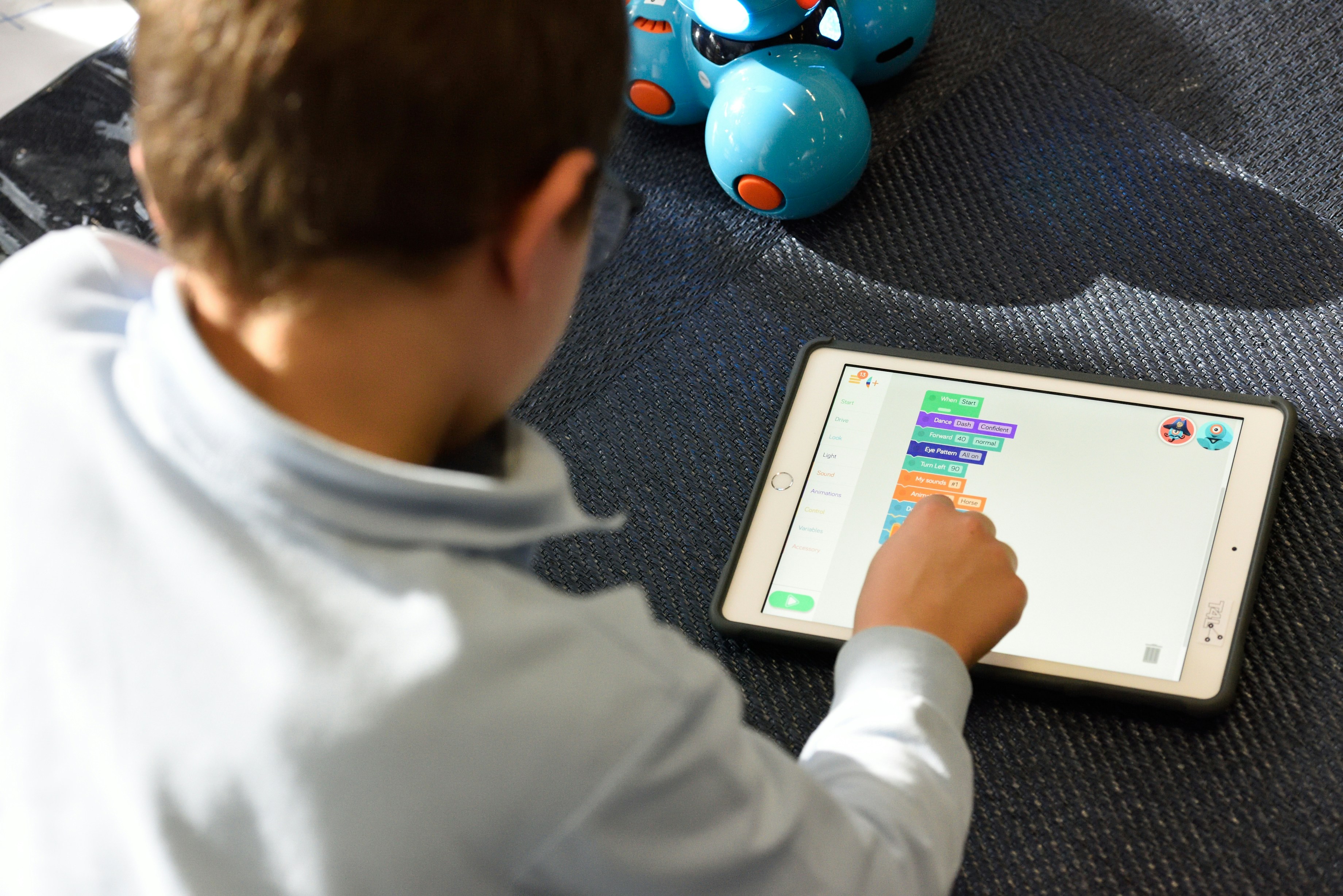
Many parents are increasingly concerned about the implications of replacing traditional books with tablets in the classroom. Over the past decade, I have received hundreds of messages and letters from desperate and disheartened parents whose children’s schools have implemented tablets without offering a non-digital alternative. Some of these children attend state schools and lack the financial means to consider other options; others are enrolled in private or semi-private institutions and lament the lack of analogical education alternative. In general, parents deplore the absence of educational pluralism in this regard.
In light of medical recommendations and declining academic standards, the Swedish government recently announced its intention to reduce pupils’ screen time, advocating instead for a return to printed books.
Why a call for caution?
To date, there exists no sufficient body of evidence to justify the use of tablets in classrooms. A decade ago, as major tech corporations began penetrating the education sector, Larry Cuban, Professor Emeritus of Education at Stanford University, stated unequivocally: “There is a lack of evidence to justify spending money on this. Period. Period. Period.” Since then, little has changed—unless one counts studies funded by technology companies or those lacking rigour: no control groups, non-representative samples, or subjective indicators such as “students enjoy it more”, or it “engages” them.
But that something is “more enjoyable” does not mean it is educational, nor even good for the child. Industrial pastries, too, are enjoyable. Also, “engagement” is often measured in terms of external motivation, disregarding the actual objective learning outcome. The improved outcomes promised by such studies never truly materialise, because what is being measured is not a genuine interest in learning, but rather a passive fascination triggered by frequent, intermittent stimuli (external motivation). The immature mind of a child becomes passive and dependent when faced with a screen governed by algorithms that determine its course.
Will our children fall behind professionally because they didn’t use a tablet at 4, 8 or 12 years old? Is it difficult to learn how to use these devices later? The answer to both questions is: no. So what sense is there in dedicating key years of their education to mastering a technology deliberately designed for obsolescence? Steve Jobs did not allow his own children to use iPads, and many tech executives send their offspring to schools that proudly abstain from screen use. They understand that technology is not neutral. They are aware of numerous studies linking screen use and technological multitasking with an impaired ability to distinguish relevance, increased hyperactivity, impulsivity, and diminished attention. They know it can dehumanise the learning process, worsen reading comprehension online compared to paper reading, interfere with the development of literacy, foster addiction, encourage superficial thinking, hinder working memory, and expose children to inappropriate content. The cognitive and economic elite have chosen to afford themselves the luxury of human relationships.
Until robust evidence proves both the pedagogical benefits and the absence of harmful effects of tablet use in schools, the burden of proof—a double burden—lies with those advocating for their integration. Caution and transparency are paramount. Just as doctors report donations from pharmaceutical companies, schools should disclose gifts received from tech firms. Let us not forget that this sector sponsors much of the research and many education conferences, purchases advertising space in media and educational journals, and shapes public opinion in favour of its economic interests—peddling technological slogans that can distort both educational effectiveness and parental guidance. This is a textbook conflict of interest. The classroom is a sacred space, and school leaders bear the grave responsibility of drawing the line over what may or may not enter it. Asking Big Tech to design educational tools is akin to asking Pizza Hut to craft school lunch menus.
In 1996, Steve Jobs reflected: “I used to think technology could help education. But I’ve come to the inevitable conclusion that the problem is not one that technology can hope to solve. What’s wrong with education cannot be fixed with technology. No amount of tech will make a dent.” One must wonder what might have become of Mozart, Picasso, Aristotle, or Dante had a device of this kind fallen into their hands at age eight.
The advantages of technology in adulthood are undeniable. Our children and pupils will one day use these tools when they truly need them—when they possess the maturity to do so with discernment and responsibility. Yet in a world of perpetual change, what young users often lack is discernment, a sense of relevance, and the certainties that allow them to grasp the value and originality of information. True preparation for digital life lies in an understanding of context—something that cannot be nurtured in the decontextualised realm of the internet. It is a solid humanistic education that equips the young mind to navigate, meaningfully, the vast ocean of digital information. Therefore, until our children have received such humanistic formation, the best preparation for the online world is still found offline—in the real world.
The growing concern surrounding excessive screen use among children is now giving rise to public alarm. Lawsuits against technology companies are multiplying as the link between screen exposure and mental health deterioration in minors becomes more evident. Let us say this clearly and unambiguously: online education has not revolutionised education. On the contrary, many lament the academic setbacks following the pandemic. The digitalisation of classrooms is an enormous, ongoing experiment, and parents were not adequately informed of the risks it entailed. Today, many feel betrayed.
Dear all who have been involved in signing contracts with major technology firms to introduce tablets into schools, you bear the responsibility for disclosing the risks that your decisions have entailed. It will be difficult to share that responsibility with the vendors. The victims will claim it was you, not they, who were the experts in education—and they will wash their hands of it.
It was reckless to rush into adopting tablets as pedagogical tools without robust evidence. Some of us have been warning of the risks for over ten years, and I am sorry to tell you that we are not the only ones. Take a closer look at the liability disclaimers embedded in the contracts you’ve signed with those tech giants, and you will see what this was really about.
